

Product
GainsLog vs Hevy: Which to Pick and Where Hevy Wins
GainsLog vs Hevy from GainsLog's builder: prices, free versions, programs and what Hevy does better, checked on both apps' own pages in October 2026.
Read article7 min read
Guides on training volume, frequency, splits and progressive overload, plus the occasional note on what's new in GainsLog. Written by Ossian, who builds the app.
Product
GainsLog vs Hevy from GainsLog's builder: prices, free versions, programs and what Hevy does better, checked on both apps' own pages in October 2026.
Read article7 min read
Product
GainsLog vs Strong from GainsLog's builder, who used Strong first: prices, free versions, programs and what Strong does better, checked in October 2026.
7 min read
Product
Hevy vs Strong, checked on each app's own pages in October 2026: prices, what the free versions limit, and which app fits the program you run.
8 min read

Training
Build muscle with two full-body workouts a week. Learn how few hard sets can work, what to expect from one weekly session, and follow a simple program.
7 min read
Training
Four gym days give you room to train every major muscle twice without turning each session into a marathon. Here is the upper/lower schedule, exercise list, and progression rule.
7 min read
Training
Three days a week is enough to build muscle. The number of days matters less than how many times each muscle gets trained, and how much of your weekly volume lands in a single session.
7 min read
Training
Full body and push/pull/legs both work. The real difference is how many days each needs to hit a muscle twice a week, and how many exercises you juggle to get there.
7 min read

Training
Upper/lower is two sessions repeated. Run them three to six times a week. Four days is the default, three works, and the ratio between upper and lower is yours to set.
6 min read
Product
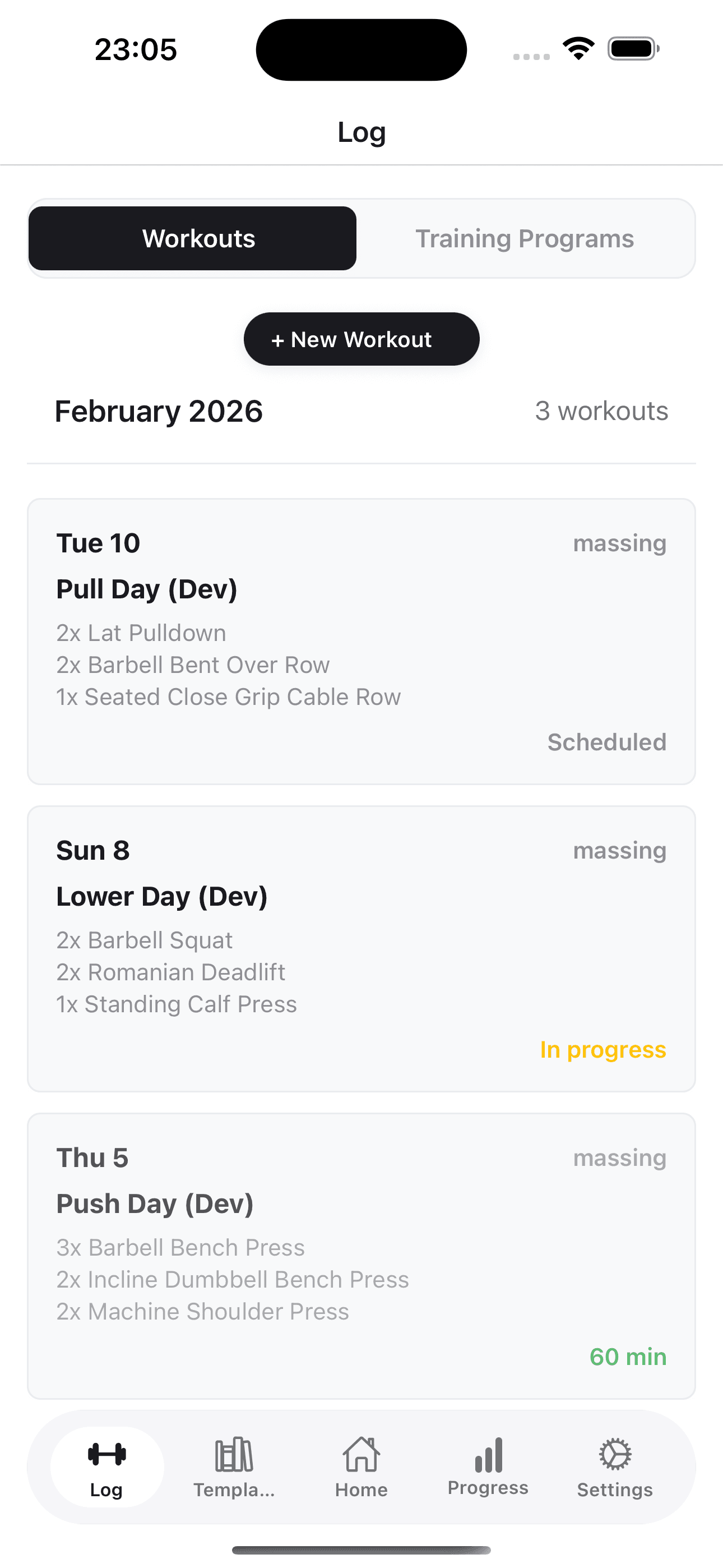
Every workout log app claims to be the best, and most people still quit the one they picked within three weeks. The questions that actually separate the app you'll be using next year from the one you delete in February aren't the features the screenshots sell.
7 min read
Training
Three days a week is enough to make real progress, but not with a body part split. Run full body on machines with five or six exercises per session, and keep the exact same session every time you walk in. That combination is what makes three sessions a week work.
8 min read

Training
Lengthened-position training is having a moment, and the exercises are mostly right. The trend conflates two mechanisms into one. Stretch and resistance profile are two distinct levers, both real, both with their own evidence. Sort them apart and the right exercise for each muscle changes.
10 min read

Training
Most lifters lose more muscle on a cut than they should because they keep training the way they did on a bulk. The trick isn't training harder when food is low. It's training less, keeping the bar heavy, and reading the strength signal that tells you whether the muscle is actually staying.
9 min read

Nutrition
The bulk-or-cut question has a clean answer based on body fat and training experience. Most ambitious lifters apply it backwards because they pick the phase that matches what they want to look like, not what their body actually is. And even when the framework says bulk, the modern evidence says the surplus matters less than the bro-bulk crowd insists.
9 min read
Training
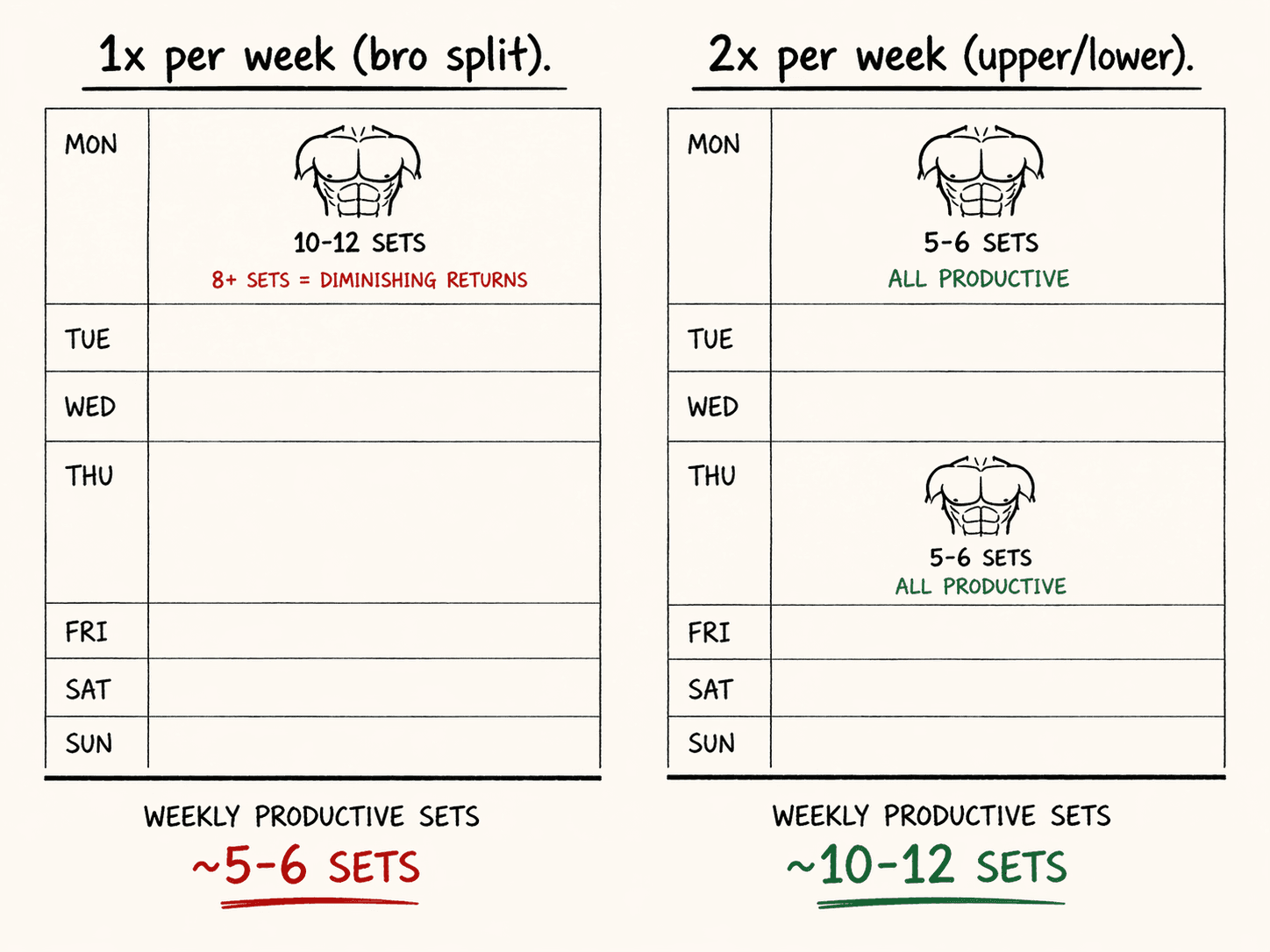
Most lifters pick their training split based on what fits the calendar. But the split you choose determines how much of your volume actually counts, and for most bro-split lifters, the answer is less than they think.
7 min read
Training
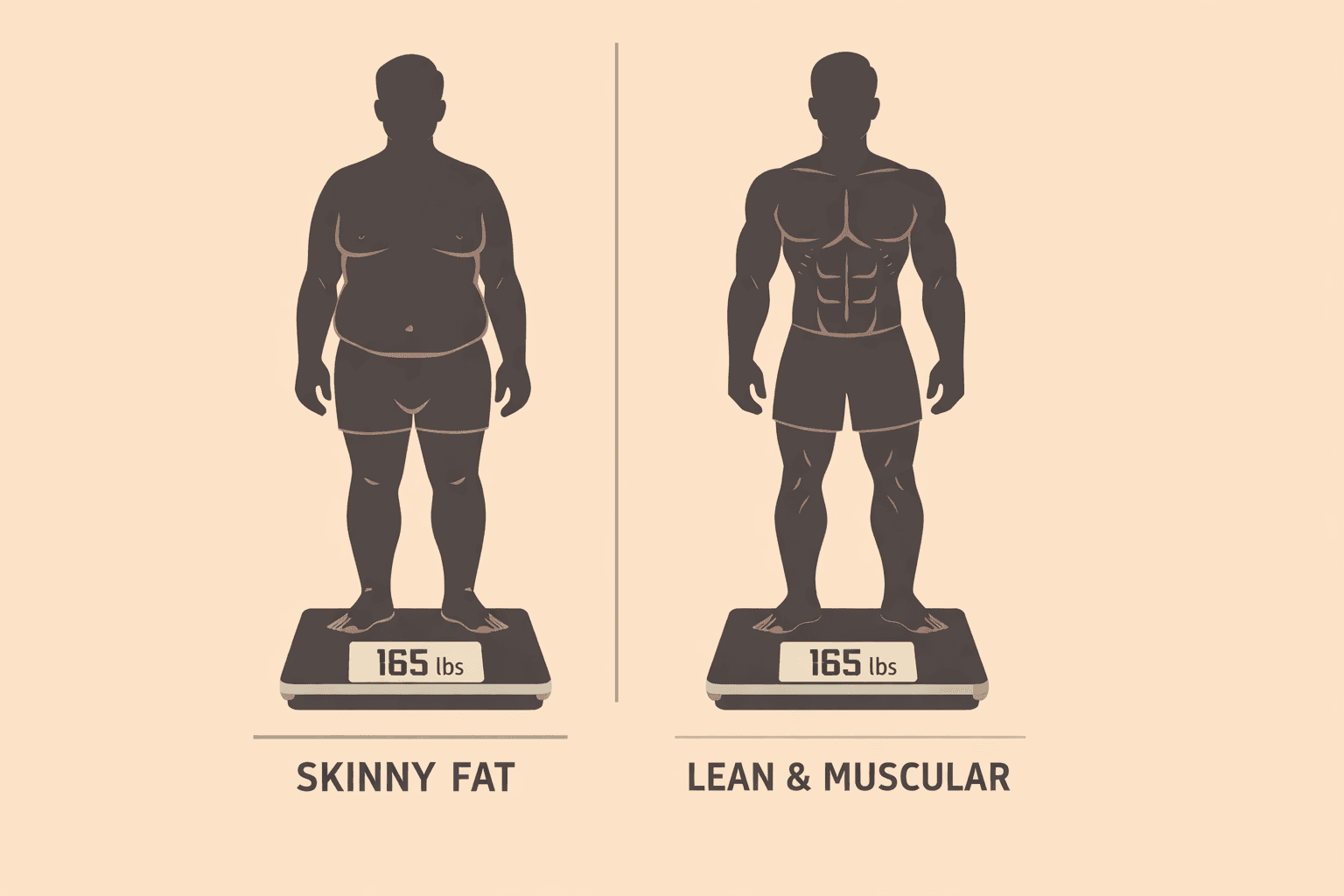
Most people treat skinny fat as a fat loss problem. They diet, they run, they lose weight, and then wonder why the body in the mirror still looks the same. Skinny fat is a muscle problem. Fix that and the rest follows.
8 min read
Training
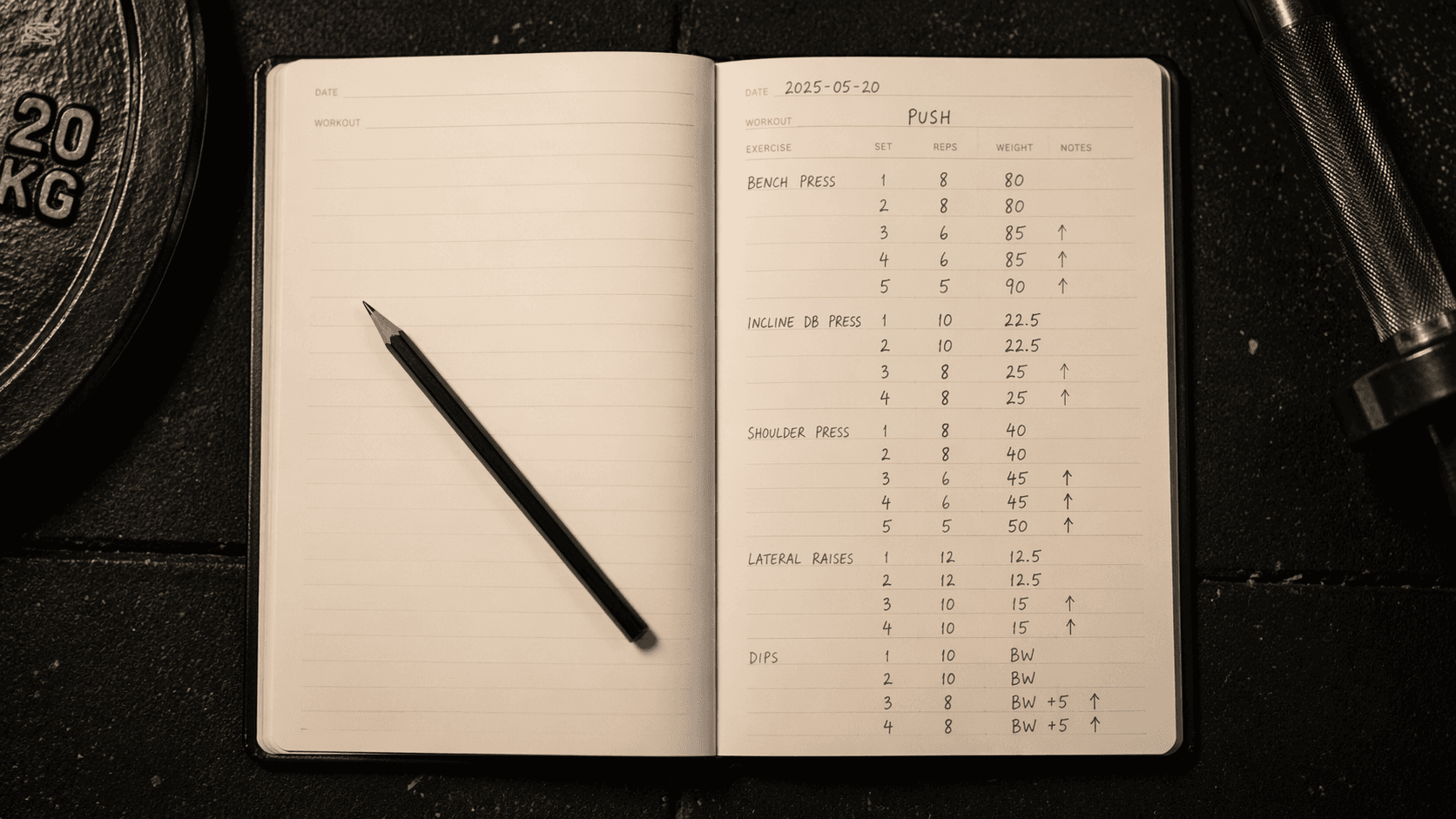
Most lifters overestimate how hard they train and can't recall what they lifted last week. Without tracking, progressive overload becomes something you hope is happening rather than something you can verify.
7 min read

Training
Most people who train 'to failure' are not close to it. And most people who use RIR to avoid failure end up training so far from it that the number is meaningless. Both mistakes come from the same root: nobody actually knows where their failure point is.
9 min read
Training
The internet can't agree on how many sets you need per week. Ten? Twenty? Forty-five? They're arguing about the wrong thing. Volume only matters once intensity is locked in, and the ceiling is lower than most people think.
8 min read
Product
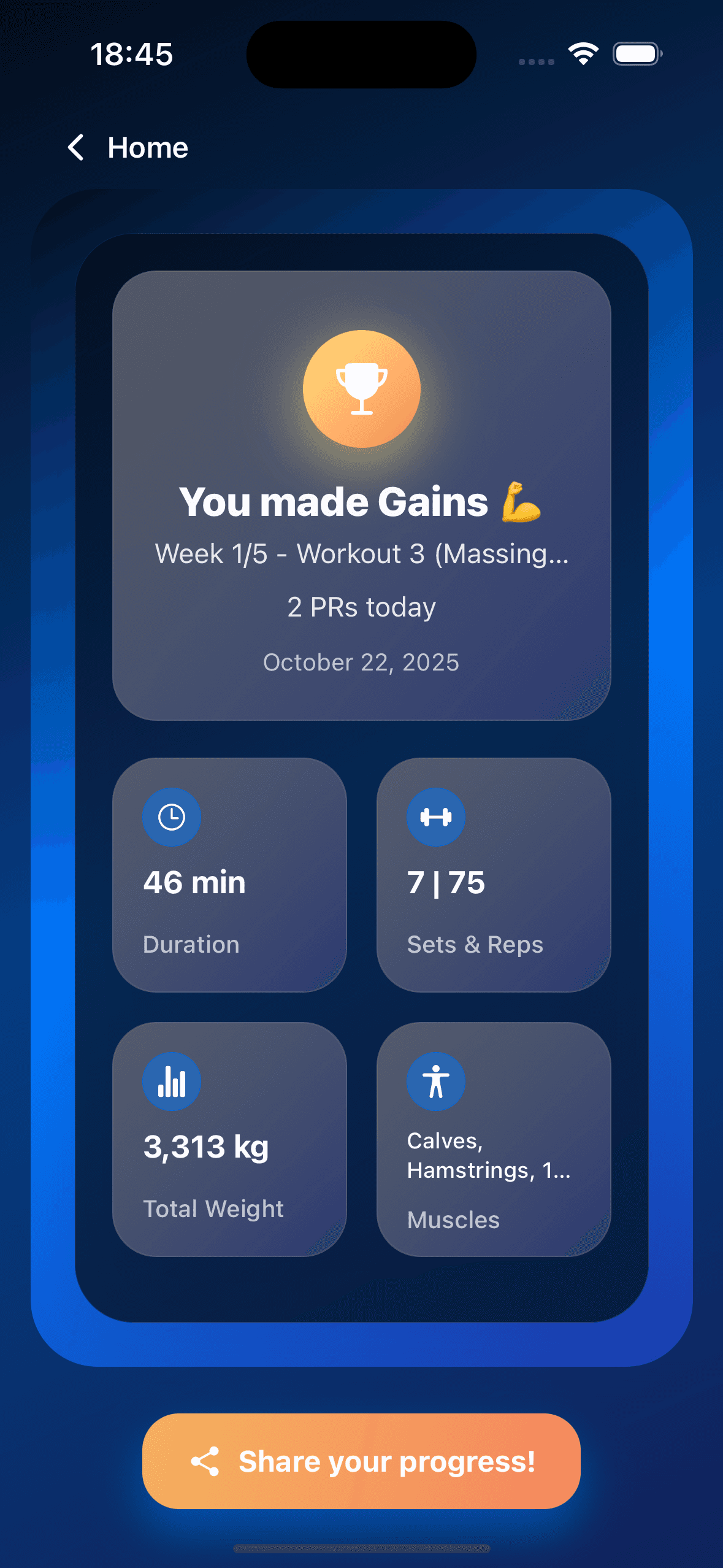
Every workout tracker app promises to be free. But "free" means wildly different things depending on which app you download. We broke down the free tiers of every major iPhone workout tracker so you don't have to.
8 min read
Training
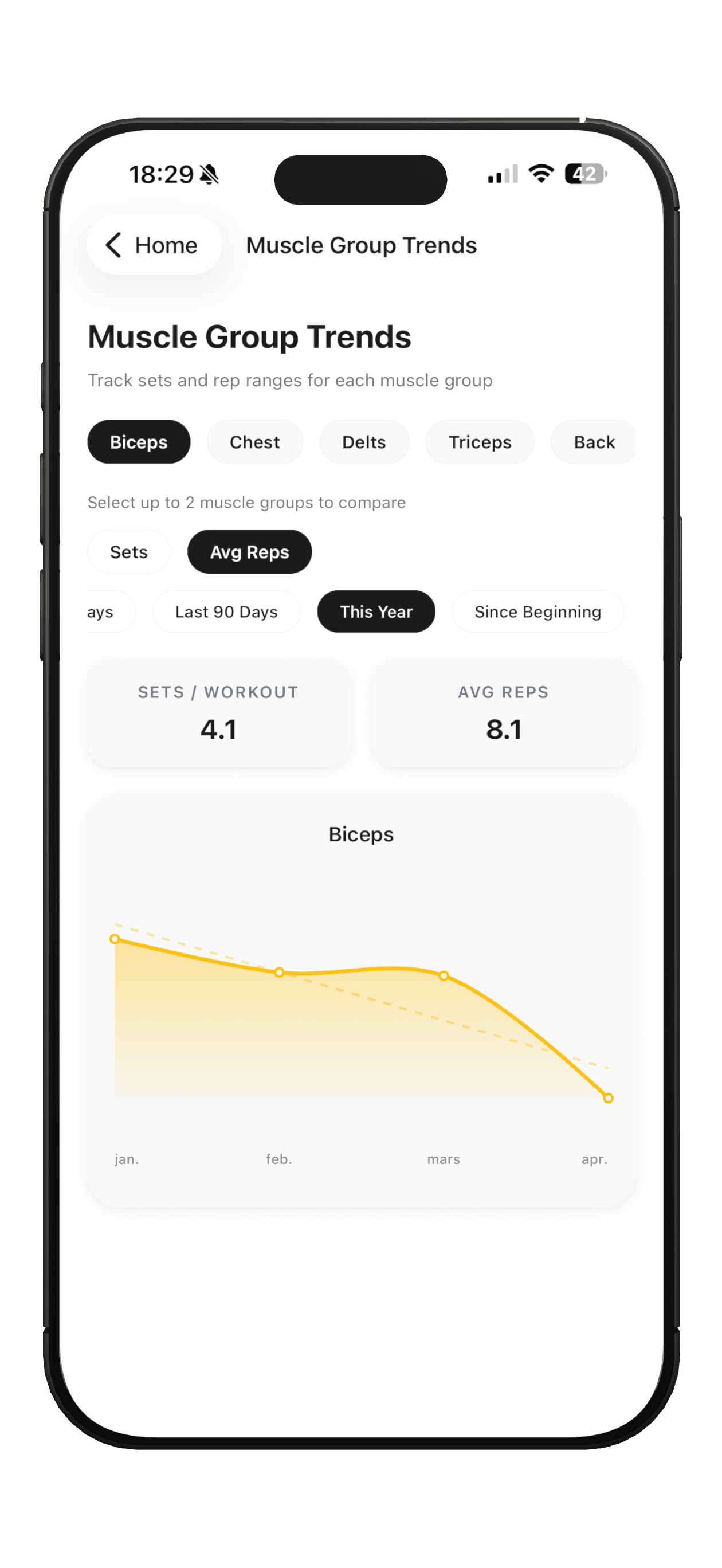
The science says 5 to 30 reps all build the same muscle. That's true, per set. But fatigue, recovery, and real-world programming tell a different story, and it's why every experienced coach ends up in the same range.
8 min read
Training
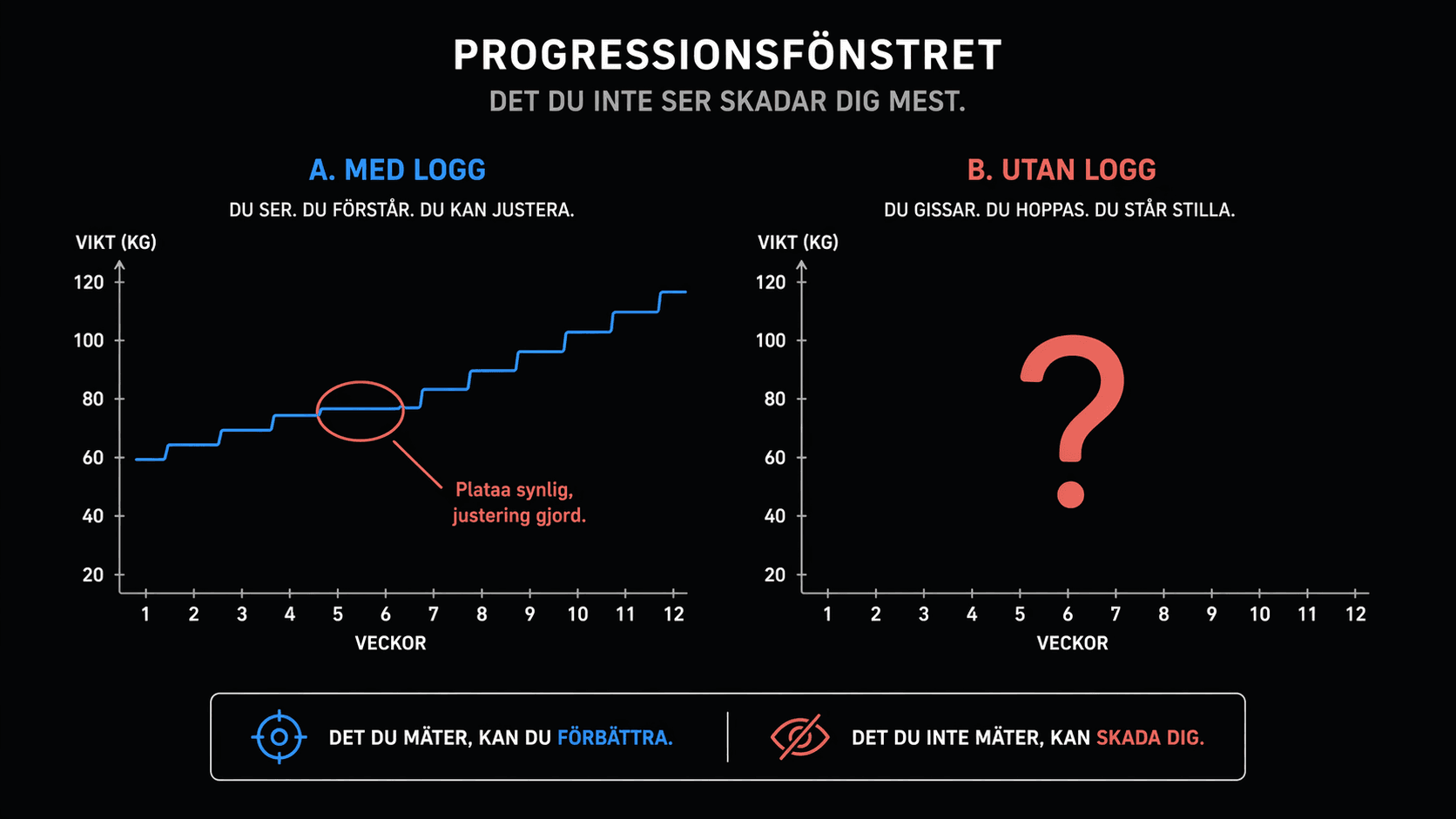
Most lifters think progressive overload is something you do. It's not. It's the signal that your training, recovery, and nutrition actually worked, and without tracking it, you're flying blind.
8 min read
Product launch
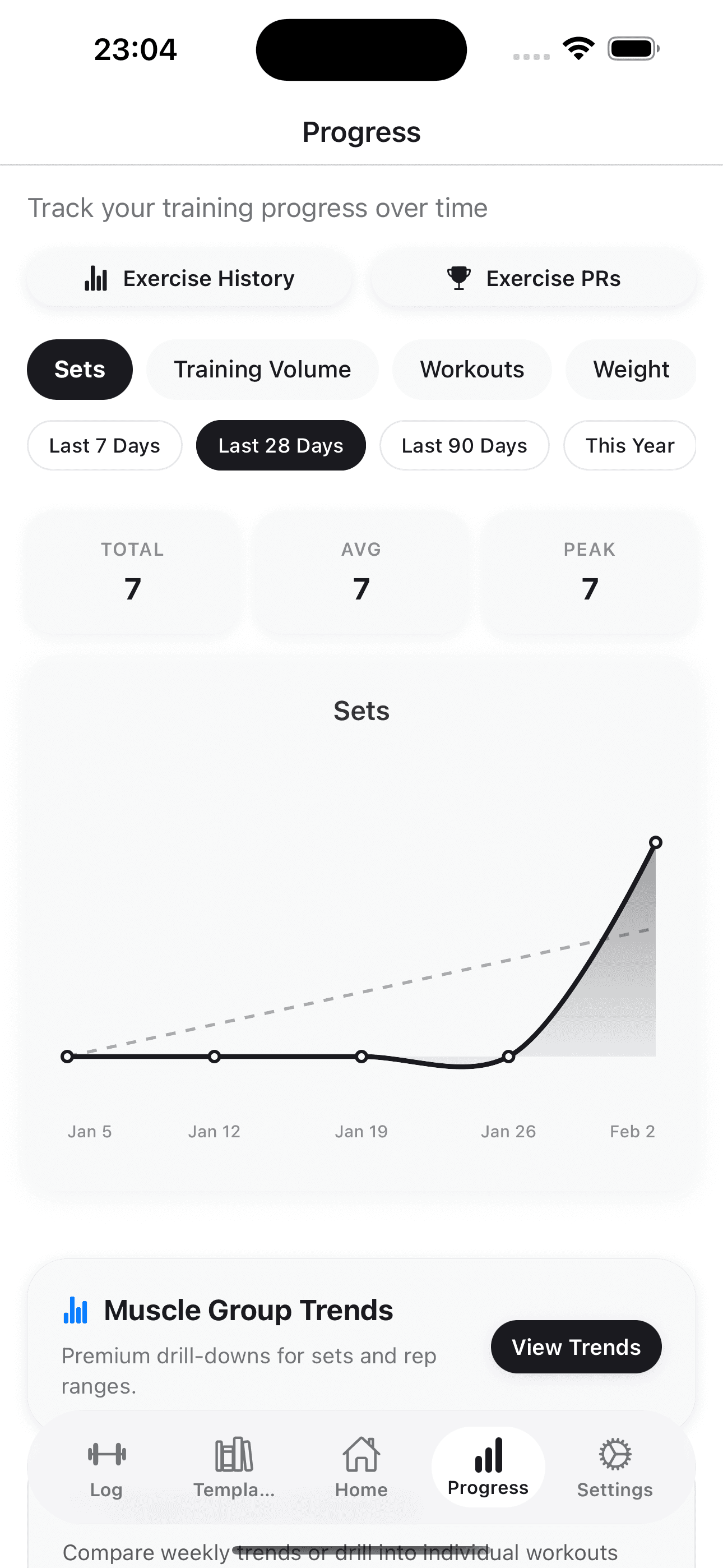
I've spent the last few months building something I wish I'd had years ago, a workout app that doesn't just track what you did, but helps you decide what to do next.
5 min read

Training
Hypertrophy means an increase in muscle size. Learn how to organize weekly sets, progress your lifts, and fit training into your schedule.
6 min read